
GILES RAFFERY, Corporate Communications and Media Advisor.
Australian trust in institutions has climbed back into neutral territory for the first time in years, yet beneath the surface, widening income gaps and a rising insular mindset present significant risks for businesses and investors alike.
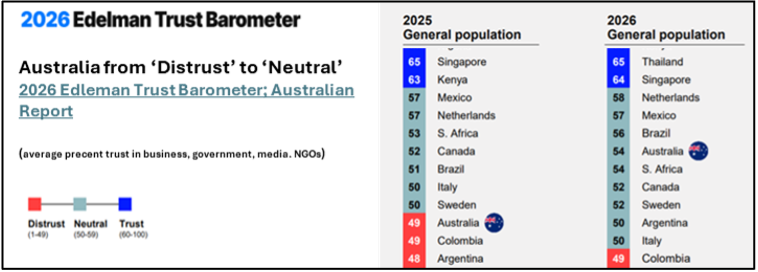
Overall Trust Improves—But Unevenly
The 2026 Edelman Trust Barometer shows trust in Australia’s four major institutions—business, government, media, and NGOs—rose from 49% in 2025 to 54% in 2026, shifting the country from “distrust” to “neutral.”
Media recorded the strongest gain, up eight points year-on-year, followed by government (six points) and business (five points).
However, this recovery is not evenly distributed. The trust gap between high- and low-income Australians has widened to 19 percentage points—the largest divide since the pandemic year of 2021.
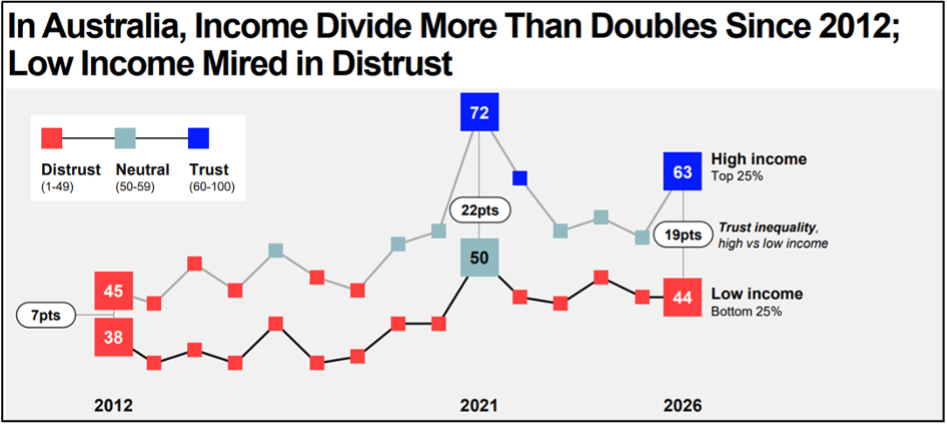
For investor relations professionals, this disparity signals that economic sentiment remains fragile amongst a substantial portion of the population, with potential implications for consumer confidence and workforce stability.
Insularity Emerges as a Business Risk
Perhaps the most striking finding is that 73% of Australians now hold an “insular mindset”—meaning they are reluctant to trust people with different values, beliefs, or backgrounds.
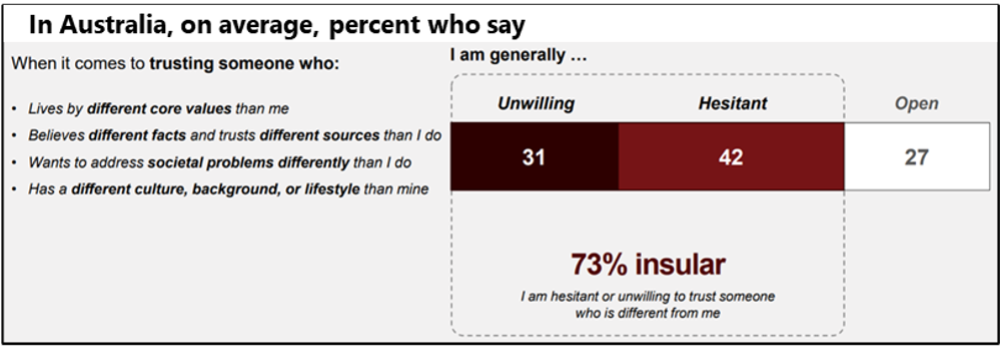
This insularity is already influencing workplace behaviour. 42% of employees would prefer to change departments rather than report to a manager with different values, while 33% admitted they would put less effort into projects led by colleagues with opposing political beliefs. For companies managing diverse teams or pursuing transformation agendas, these dynamics may pose productivity and culture risks.
Economic Concerns Weigh on Outlook
Australian optimism remains subdued. Just 22% of respondents believe the next generation will be better off, compared with a global average of 32%.
Trade and tariff concerns are also prominent: 60% of Australians worry about how global trade tensions could affect their work, and 54% fear job losses from a potential recession.
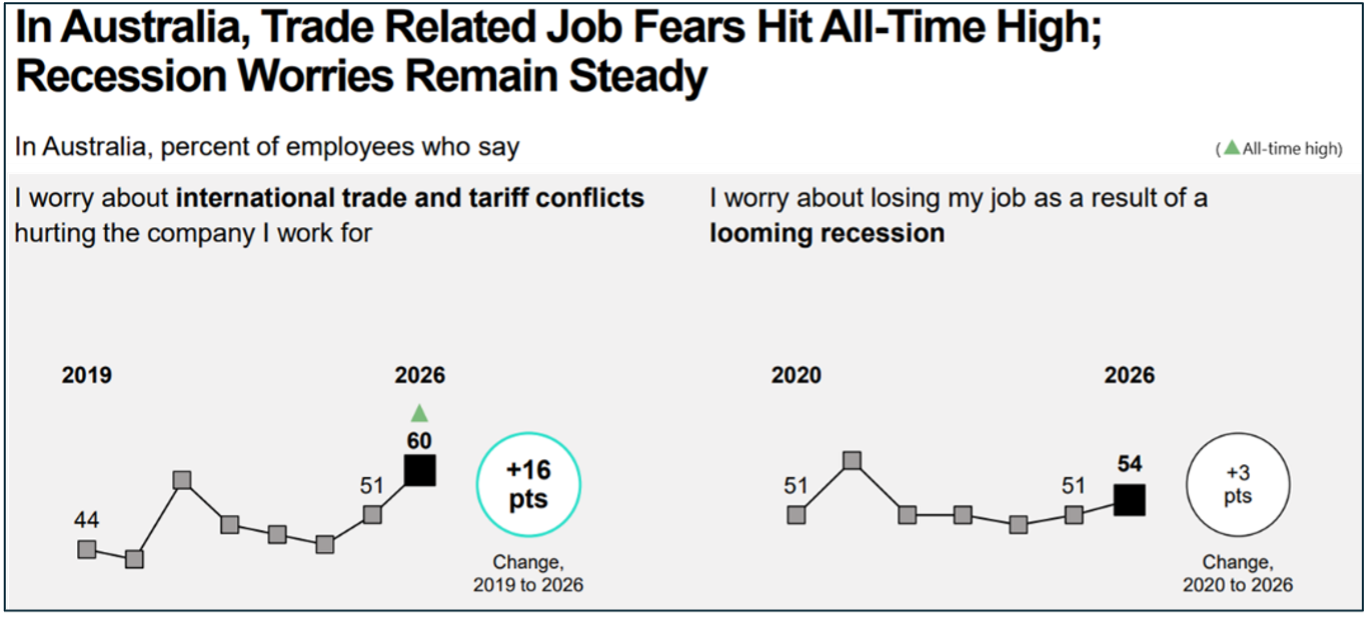
Meanwhile, 44% would support reducing the number of foreign companies operating locally—even if it resulted in higher prices—a figure 10 points above the global average. This protectionist sentiment may have implications for companies operating in Australia or with cross-border investment strategies.
Expectations for Institutional Leadership
Australians expect institutions—particularly government and business—to take the lead in rebuilding trust. Eight in ten believe government holds the greatest obligation, though only 36% think it is delivering. CEOs face similar scrutiny: 72% of Australians believe business leaders are obligated to help bridge societal divides, yet only 36% feel they are meeting that responsibility.
FIRST Advisers is well placed to support investor-facing communications that underscore the importance of authentic leadership on social and economic issues. This should not be thought of as a peripheral ESG exercise, but as a core element of maintaining stakeholder confidence.